
Pillowcase Project prepares children for possible disasters
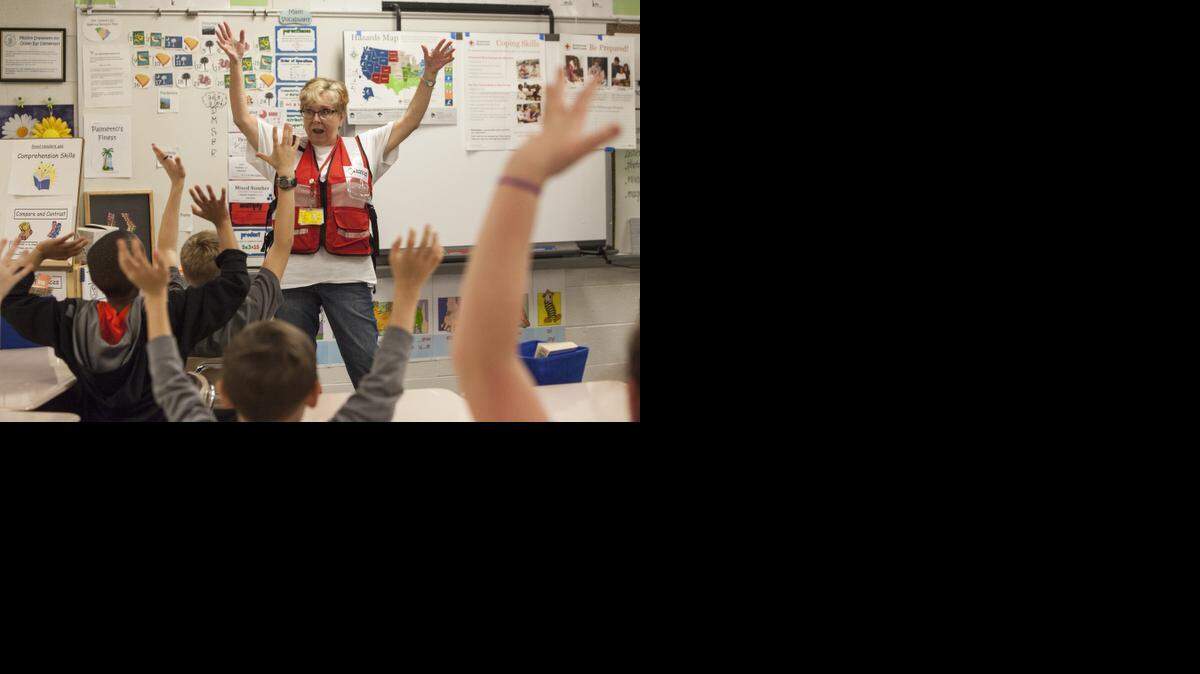
When Ocean Bay Elementary School teacher Pam Datlof first heard about The Pillowcase Project, sponsored by Disney and presented by the American Red Cross, she jumped at the opportunity to bring the presentation to her third-grade class.
A three-year pilot project targeting third- through fifth-grade students, The Pillowcase Project is designed to address core competencies for those grade levels. During a 45-minute standardized, state-of-the-art education program provided by trained Red Cross volunteers, children learn about disaster preparedness and how to practice and share that information at home.
At the end of the presentation, each child receives a “My Preparedness Workbook,” a certificate of completion and a special pillowcase with suggestions of items to be stored in them. They would then place the pillowcases under their beds at home where they remain ready to use when disaster strikes.
Datlof is a survivor of 2005’s Hurricane Katrina, which claimed the lives of 1,833 people in five states and left an estimated $108 billion in damages in its wake, and knows firsthand the importance of disaster preparedness. Since The Pillowcase Project was created as an art therapy program by the American Red Cross Southeast Louisiana Chapter to help children throughout the New Orleans area recover from the devastation of Katrina, Datlof found the program to be the perfect way to share important information with her students.
With the 10th anniversary of Katrina — classified by the Federal Emergency Management Agency as “the single most catastrophic natural disaster in U.S. history” — approaching in August, the local Red Cross chose to kick off The Pillowcase Project in the coastal region by placing an emphasis on hurricanes.
Melise Ellison, a Red Cross employee from Greenville, serves as program manager for The Pillowcase Project in South Carolina. She said the pilot project, which has been presented in select areas since receiving the Disney grant in 2013, has been continuously improved through feedback from teachers and student assessment quizzes. In April, it moved into its third phase and final redesign with 2015 designated for rollout to every Red Cross region across the nation.
“The Pillowcase Project, thanks to Disney, has been really well put together. It addresses everything 8- to 11-year-olds need to have to understand emergencies that come their way,” Ellison said. “The idea is to train and educate this generation so as they grow up, they’ll be more prepared and have that insight that is important.”
While hurricanes are the focus of the project in the coastal area, various other hazards such as tornadoes or earthquakes can be used for presentations, however, fire safety and coping skills are emphasized in all presentations. Each program culminates with distribution of a white pillowcase, decorated with some of Disney’s most recognizable characters. In the center is open space for the child to personalize his or her pillowcase using colored cloth markers.
Red Cross volunteers are being engaged to receive training so they can help meet the goals of presenting the project nationally. Those goals include reaching 300,000 to 500,000 students this year.
“By helping the kids understand preparedness and encouraging them to take these discussions home, we are building resilient kids, families and communities,” said Lou Palm, local Red Cross disaster manager.
He added that the project is aimed at saving children’s lives. “You can’t get better than that,” he said.
Engaging local volunteers
Gini Calchera is working locally with Palm to establish a team of volunteers to present the program to area schools, summer camps, youth clubs and other groups that meet the targeted ages.
Calchera, along with Pam O’Day, spent the afternoon at Ocean Bay Elementary recently, making their first presentation to local third-graders and teaching the difference between a hurricane watch and a hurricane warning. Calchera urged the children to consider their pillowcase as their shield, a way to be prepared with things they might want or need if they had to leave their home when a storm seems imminent.
In the pillowcase, they might have a flashlight with extra batteries, a weather radio, some canned foods with pop-top openings and a comforting blanket or favorite stuffed animal.
“This is the perfect age to let kids know they are empowered,” Calchera said following the presentation. “The kids were involved and asked good questions. They took the shield business to heart.”
During the program, she and O’Day stressed that retrieval of the pillowcase was not a part of fire safety, emphasizing that during a fire, the children should “get low, get out and stay out.” They encouraged the children to talk to their parents about establishing a designated meeting place outside the home in the event of a fire.
Calchera has been volunteering with the Red Cross since retiring from a career as a project manager in the banking industry. She said she is especially excited about The Pillowcase Project because it is helping kids to plan and to be safe.
O’Day is new to Red Cross volunteering but said she has loved every minute. “There are a lot of opportunities to give back to the community,” she said. Her background with the Army National Guard and later as a federal employee gives her insight into the Red Cross’ role serving the military. As for the presentation, O’Day said she thoroughly enjoyed the children’s enthusiasm and the fact they were willing to share their own experiences during the presentation.
Staying prepared
Datlof never forgets the images of devastation she saw upon return to the Mississippi Gulf Coast after Katrina. She keeps a Hurricane Katrina scrapbook in her classroom and shares it with her students each year. She said she realizes her family exchanged living in one hurricane-prone area for another, but after evacuating to Myrtle Beach to stay with family, they decided to relocate permanently.
Her experience with Katrina taught her to always be prepared. Her family’s hurricane kit remains in their garage, battered a bit from the years but still ready to go when needed. She is glad to pass on to her students readiness information that could save their lives.
Datlof and other teachers who schedule the presentations will have the opportunity to continue conversations about safety and preparedness through curriculum tools that include three posters and lesson plans that allow them to do follow-up activities with their students.
To schedule The Pillowcase Project presentation or for more information on becoming a volunteer presenter, contact your local chapter of the American Red Cross.
ANGELA NICHOLAS is a freelance writer living in Murrells Inlet, reachable at aknicholas@sc.rr.com.
For more information
To schedule The Pillowcase Project presentation or to become a volunteer presenter, contact your local chapter of the American Red Cross.
▪ Horry County | Eastern SC Chapter, Myrtle Beach, 477-0020
▪ Georgetown County | Lowcountry SC Chapter, North Charleston, 843-764-2323
▪ Brunswick County, N.C. | Cape Fear Chapter, Wilmington, N.C., 910-762-2683
This story was originally published April 19, 2015 at 2:00 AM with the headline "Pillowcase Project prepares children for possible disasters."