Catholic church, private schools sue to change SC Constitution over COVID relief funds
Resuscitating the legal battle over whether coronavirus relief money can be spent on South Carolina’s private schools, a new federal lawsuit calls for removing the very amendment in the state constitution that bars South Carolina from using public funds for the direct benefit of private and religious schools.
Announced Wednesday, the federal civil rights lawsuit argues Article XI, Section 4 of the South Carolina Constitution should be removed because the law itself was “born of bigotry and prejudice, based on race and religion.”
“It violates the equal protection and free exercise clauses of the U.S. Constitution, and should no longer bar Plaintiffs’ schools from equal access to these essential relief funds,” the suit contends.
Filed in U.S. District Court in Columbia, this latest legal challenge is backed by a powerful contingent that together represents more than 50 religious and independent schools in South Carolina.
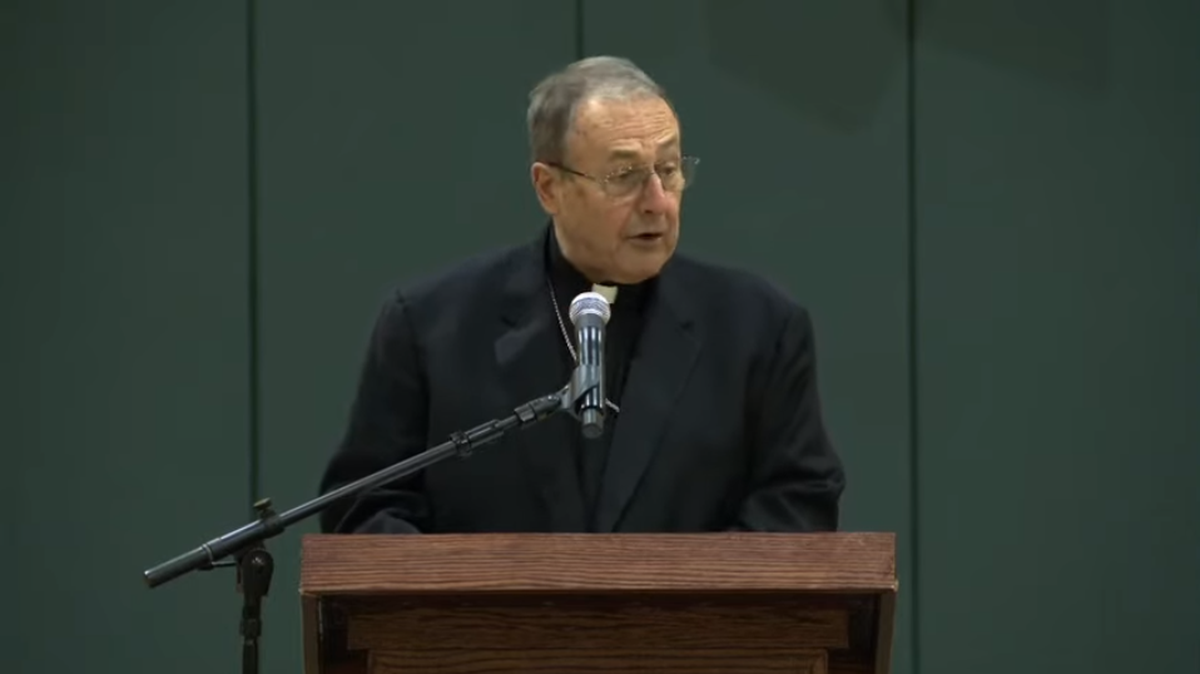
The 14-page complaint was filed by Bishop Robert E. Guglielmone, the head of the Roman Catholic Diocese of Charleston. The diocese covers the entire state of South Carolina and has 33 K-12 schools.
Also joining the lawsuit is the South Carolina Independent Colleges and Universities, a nonprofit that represents 20 of the state’s independent colleges and universities, including five historically Black colleges and universities.
It is the latest attempt at securing federal relief dollars for private and religious schools. Last year, the South Carolina Supreme Court twice stopped Gov. Henry McMaster from trying to spend $32 million in tax dollars on private schools in the state.
In a statement provided to The State newspaper, McMaster spokesman Brian Symmes said the governor believes private, parochial and independent schools provide many working or low-income parents with options to choose the type of education environment and instruction that best suits their child’s needs.
Symmes also said McMaster still thinks the courts “incorrectly decided” in his challenge to send the $32 million to private schools.
“Nobody fought the SAFE grants lawsuit more vigorously than the governor did, and he still believes it was incorrectly decided,” Symmes said. “Every step of the way, the governor warned that the lawsuit could have far-reaching consequences and unnecessarily prevent these schools and parents from accessing emergency federal funds.”
Guglielmone said at a Wednesday press conference that the latest legal challenge is not only about expunging “the anti-Catholic sentiment” that still haunts the state, but to create a “more inclusive, uplifting future” for parents and children who seek out private education.
“We’re really here today to stand up for children and families across South Carolina, and to face, head-on, the anti-Catholic and racist history that is ingrained in our state’s constitution,” Guglielmone said, speaking at St. Anthony of Padua Catholic School in Greenville.
In a prepared statement, South Carolina’s Catholic bishop said, “Many families have been significantly hurt by the COVID pandemic and they should not be denied financial assistance based on where they desire to send their children to school.”
The lawsuit was brought by attorneys at the Liberty Justice Center, an Illinois-based conservative public interest law firm. When attorney Daniel Suhr announced the lawsuit inside a gymnasium of fourth- and fifth-graders at the private Catholic school, there was scattered applause.
The lawsuit centers on the so-called “Blaine Amendment,” which owes its name to former speaker of the U.S. House, James Gillespie Blaine. In 1875, the Maine Republican proposed a U.S. constitutional amendment to prohibit states from funding religious education.
The effort failed, but 36 states, including South Carolina, passed their own constitutional amendments barring state funding of religious organizations, including religious schools.
Suhr said the amendment included in South Carolina’s 1895 constitution was chiefly the product of “Pitchfork” Ben Tillman, a notorious former governor and U.S. senator who also was a member of an all-white, post-Civil War militia responsible for lynching Black people.
“Let’s be clear: Tillman was a racist and a bigot, and he was a champion of the Blaine Amendment,” Suhr said. “He weaponized the Blaine Amendment as part of his quest to achieve the lasting disenfranchisement of the state’s recently freed slaves, and he aligned that with this anti-Catholic prejudice simmering at the same time.”
However, the Blaine Amendment that is currently on the books in South Carolina was amended in 1972. Lawmakers removed the prohibition against indirect public funding of religious schools, but kept the ban in place against direct public funding of such institutions.
Suhr said recent legal efforts to bar private schools from accessing COVID-19 relief funds was discriminatory.
If the courts were to remove the amendment, Suhr said it would “take away the handcuffs” preventing the governor and lawmakers from serving students in these schools.
He then posed a question.
“I ask, for the children in this gym and those they represent, are they any less deserving of our help than any other child in South Carolina?”
“The obvious answer,” Suhr answered, “is no.”
Delores Gilliard, the principal at St. Martin de Porres in Columbia, said the last year of the pandemic has been incredibly difficult for teachers, staff, students and families. She said this past week she received “several calls” regarding enrollment for the upcoming school year.
“If our schools were not open, our parents, who are working-class parents — some of them being students themselves who are seeking to provide a better life for their families — would not be able to keep their jobs,” Gilliard said.
Jeff Perez, the president and CEO of the South Carolina Independent Colleges and Universities nonprofit, said Tillman and the Blaine amendment sought to “ensure religious organizations would be unable to fully realize their efforts to foster educational institutions.”
Perez said 45% of students who attend the nonprofit’s member colleges and universities receive federal Pell Grants, aid designed to help the most economically disadvantaged students.
Despite the recent pair of South Carolina Supreme Court rulings that determined public dollars cannot directly benefit private schools, Perez said the federal relief money was “clearly intended for us.”
This story was originally published April 14, 2021 at 11:06 AM with the headline "Catholic church, private schools sue to change SC Constitution over COVID relief funds."