SC agency knew about polluted farms for years, but didn’t stop use of noxious sludge
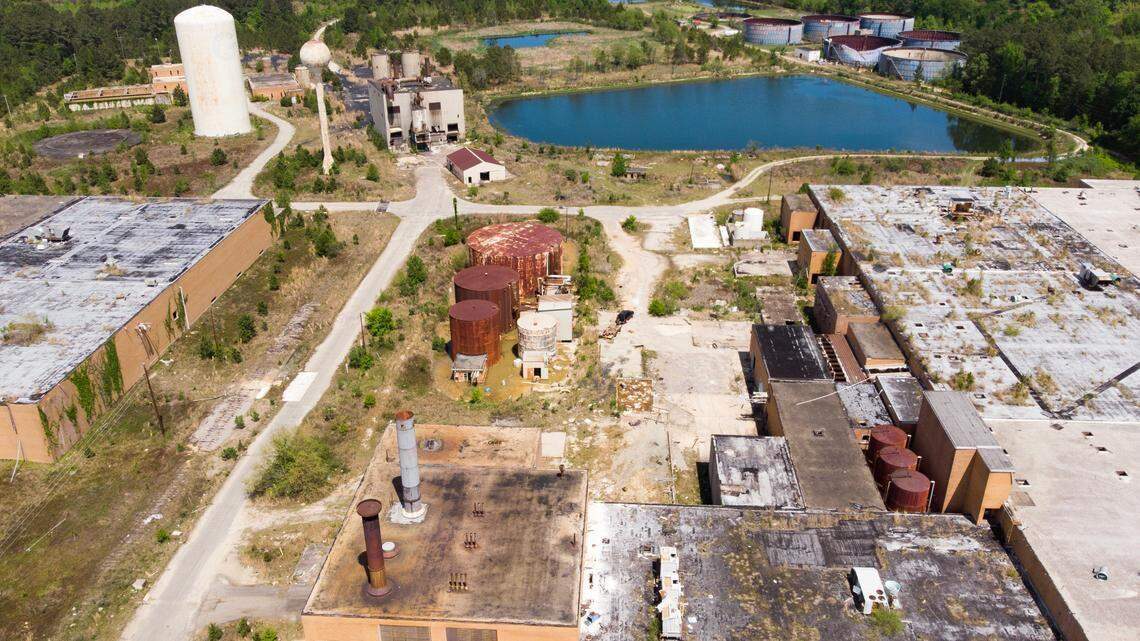
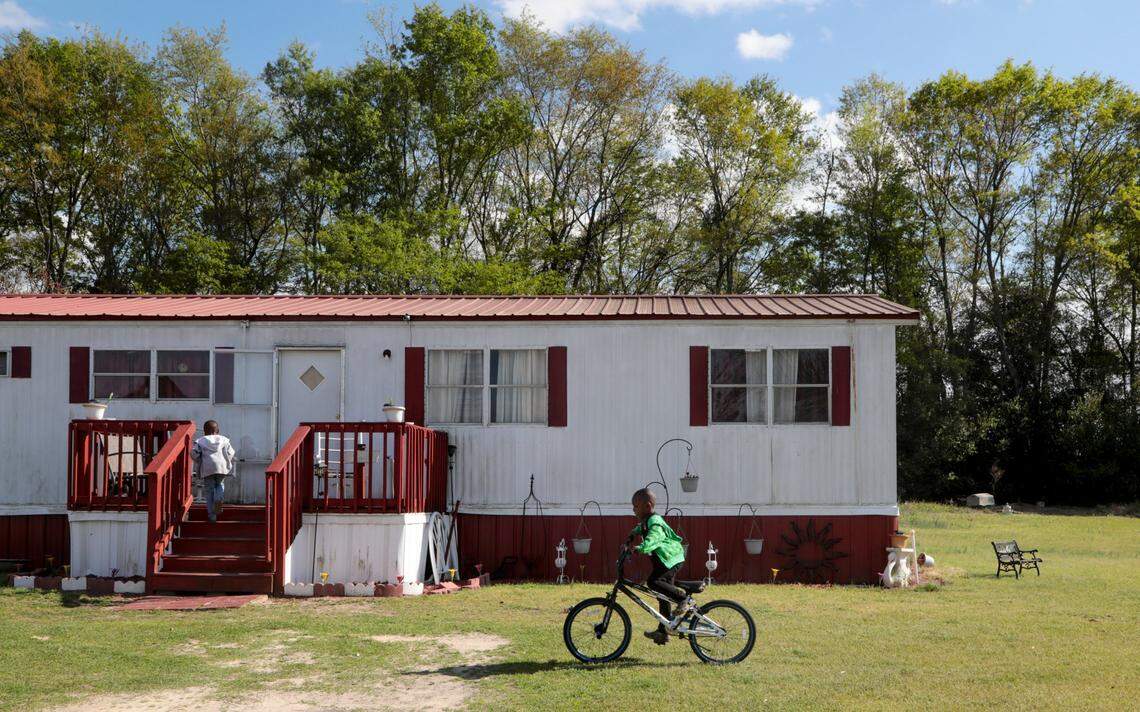
Cecilia Williams lives across a dusty lane from a farm that, for years, used waste sludge provided by a textile plant to fertilize crops.
Then in 2019, government agencies discovered that the land where the sludge had been applied was polluted with dangerous chemicals like those produced at the textile plant in Darlington County. They later found the drinking water her family relied on contained the same types of chemicals.
While those findings are enough for Williams to worry about, she can’t understand why South Carolina’s government – once it knew about the pollution on the old farm in 2019 – allowed more waste sludge to be spread on the agricultural fields along Journeys End Road.
“It doesn’t make sense,’’ Williams said. “If stuff is still in the ground and you put something else on top of it, what is that going to cause? Did they ever check?’’
The S.C. Department of Environmental Services allowed sludge disposal at the former Winfred Davis farm in 2020, 2021 and 2025, after finding dangerous forever chemicals in the farm’s soil in 2019, as well as in nearby drinking water wells and creeks, according to land application records and a U.S. Environmental Protection Agency report
State environmental regulators have approved the discharge of more than five million gallons of meat processing plant sludge on the farm since learning about soil pollution in fields where sludge from the Galey and Lord textile plant was spread years earlier, according to state agency records and documents from the U.S. Environmental Protection agency.
Sludge spreading at the Davis farm is part of a larger concern about the effect sludge from meat processing plants is having on the environment of eastern South Carolina, particularly on farm fields where Galey and Lord dumped textile plant waste years ago.
Today, thousands of acres across Darlington and nearby counties are being used by poultry processing plants and related industries for the disposal of sludge in communities that once received textile plant sludge.
State officials have declined to say how many old Galey and Lord fields have been used for disposal of meat processing plant waste. One farmer says it’s at least a dozen sites.
Galey and Lord, a now abandoned manufacturing plant on the Great Pee Dee River, produced tons of semi-solid sludge that was filled with metals and forever chemicals, which are toxic compounds widely used in consumer products. They can cause cancer, thyroid problems and immune system deficiencies.
Meat plant sludge can include blood and guts, and contain bacteria, heavy metals and other contaminants that can have their own health effects. It also generates powerful odors that spark complaints from neighbors when it is applied to the land.
A key question is whether sludge from meat plants also contains forever chemicals, formally known as PFAS.
Another question is whether the different pollutants in meat plant sludge will worsen contamination on some of the old Galey and Lord sludge fields, even if the new sludge does not contain forever chemicals.
Nearly 10,000 acres of farmland received state approval to use the textile plant’s waste sludge from 1993 to 2013, and dozens of wells near many of these sites are polluted with high levels of forever chemicals.
Some people whose family members drank from wells for years say they have suffered illnesses and death that may be linked to drinking PFAS-polluted water. Despite that, sludge spreading didn’t stop after Galey and Lord shut down more than a decade ago.
State and federal environmental records leave little doubt the farm across from Williams’ home was used for both Galey and Lord sludge and meat processing plant sludge. Those records show meat plant sludge being applied to fields that received Galey and Lord waste years ago, as well as EPA reports documenting soil testing on the Davis farm in 2019.
Winfred Davis, who died in 2024, previously told The State that he was assured by government regulators that his farm fields were not polluted. The newspaper was unable to verify that claim.
South Carolina’s decision to allow more sludge on farms Galey and Lord once relied on is drawing criticism from former Society Hill Mayor Dwayne Duke, several state lawmakers, environmentalists and others.
State Reps. Joseph Bustos and JA Moore, who are tracking PFAS problems in South Carolina, said they’d like to know why the state allowed meat plant sludge on the farm where Galey and Lord representatives once spread textile sludge.
By allowing the additional slurry on farm fields formerly used by Galey and Lord, Moore said the state runs the risk of further polluting an area it already knows is contaminated with PFAS.
“This is more than unsettling,’’ said Moore, a Democrat from the Charleston area. “If this is true, it’s egregious. I don’t see how we keep doing the same thing over and over. People are going to get sick again, or get sicker than they are.’’
According to one EPA report, state and federal officials found high levels of forever chemicals in the soil in 2019 after testing three farming tracts, including the Davis farm on Journeys End Road. They also found PFAS levels thousands of times higher in groundwater than a proposed federal drinking water standard. And they found elevated PFAS levels in a creek nearby.
Bustos, a Republican from the Charleston area, recently met with Environmental Services Director Myra Reece to voice his concerns. He is pushing legislation to limit the use of PFAS-tainted sewer sludge as fertilizer in South Carolina.
He has a range of concerns, but what makes matters worse is the meat processing waste often isn’t coming from plants in South Carolina, Bustos said. A substantial portion is coming from North Carolina, according to data analyzed by private consultants for a Pee Dee landowner.
“We can’t even take care of our own stuff, and now we’re importing this stuff,’’ he said. “It’s like taking a hammer to your own fingers.’’
Nobody’s checking
It isn’t clear whether sludge from meat plants includes forever chemicals like the waste from Galey and Lord.
Sludge haulers and meat plant operators insist that it doesn’t. But data from state regulators in North Carolina indicate that forever chemicals have sometimes shown up in wastewater systems serving meat plants in the Tarheel State.
Overall, a recent report found at least 23 instances where PFAS had shown up in the waste stream of three of North Carolina’s most prominent poultry and meat operations: Perdue Farms, Smithfield Foods and House of Raeford.
Perdue and House of Raeford have approval to land apply sludge in South Carolina. Smithfield says it has not sent sludge to South Carolina from North Carolina..
All told The State they do not generate PFAS.
Much of the PFAS discussed in the 2023 North Carolina report flows from water that comes into industrial plants or from wastewater leaving meat processing plants as they discharge to rivers.
The N.C. Department of Environmental Quality’s data indicated that, in most cases, regulators did not find much PFAS in the sludge from chicken plants. But no one knows for sure whether PFAS is contained in any meat processing plant sludge being used in South Carolina as fertilizer.
Why?
Nobody is checking.
As of last month, South Carolina officials indicated that they had not looked to determine if forever chemicals are in the meat plant sludge applied to farm fields where Galey and Lord’s refuse once was spread.
The S.C. Department of Environmental Services told The State there are not enough clear standards to measure PFAS levels in the soil. The agency also indicated that meat processing plants that have sent the gooey waste to former Galey and Lord sludge fields have not been required to test the material for PFAS before they coat the land with it.
State regulators have said they don’t have enough authority to require sludge testing for PFAS. Critics dispute that, saying the Environmental Services department won’t take action for unknown reasons.
“DES has the authority to require that sampling,’’ Congaree Riverkeeper Bill Stangler said, noting “that they just refuse to do it. I don’t know if chicken sludge should be applied anywhere because we don’t know what’s in it. And the agency continues to abdicate their responsibility.’’
Agency dodges questions
The Department of Environmental Services, formerly the Department of Health and Environmental Control, has had little to say about its reasoning for allowing more sludge spreading on the Davis property across from Williams home in 2020, 2021 and 2025.
The Environmental Services department, which did not answer inquiries Thursday or Friday from The State, failed to answer questions last month about how many other Galey and Lord sludge fields were used by other entities to dispose of their waste.
SC DES officials also did not explain what made them think the Davis farm was suitable for more sludge spreading from 2020 to 2025, despite learning about the soil contamination from 2019. The department issued permits for the sludge application work. Permits typically have limits on metals and pathogens in the sludge, but not forever chemicals.
“If a permit application meets all applicable state and federal laws and regulations, the agency is required to issue the permit,’’ the department’s media relations staff said in a March 26 email.
Farmer Robbie O’Neal estimates there were at least a dozen former textile plant disposal fields that later were used for disposal of meat plant sludge. He based his estimate on personal knowledge of sludge-spreading in Darlington County. O’Neal’s family once used Galey and Lord sludge, only to find out later that it was contaminated, The State reported in a 2023 investigative series.
The department’s answers haven’t satisfied O’Neal or the multitude of Darlington County residents who showed up at a public meeting last month to hear about plans to put sludge on 27 more agricultural sites in Darlington County.
At the March 19 meeting, a DES official indicated that the department was no longer allowing sludge to be put on fields once relied upon by Galey and Lord.
But the department staff did not fully explain to people attending the meeting what drove the decision to stop allowing the chicken sludge on old Galey and Lord fields in 2026, when the agency allowed the practice in 2020, 2021 and 2025 at the Davis farm.
An agency official told the crowd DES was “just trying to be protective,’’ but she did not elaborate. The environmental agency declined to answer questions from The State after the meeting.
Former Society Hill Mayor Duke had pressed the agency to explain why it previously approved spreading more sludge on former Galey and Lord sludge fields, only to stop doing that in 2026. But he left the meeting dissatisfied.
“I never received an answer,’’ he said, noting in a recent interview that PFAS, because of its durability, “is never going to get cleared out.’’ Duke said putting more sludge on old Galey and Lord sludge fields potentially allows more contaminants “in our water and down underneath the ground.’’
The threat to the public from waste sludge was substantial enough that the EPA installed filters on polluted wells near the Davis farm and other sludge sites. Public water lines also are now available in some areas where PFAS poisoned private wells.
But that doesn’t mean it’s OK to pollute groundwater with PFAS from sludge that’s spread on the land, said Pee Dee Riverkeeper Dylan Coleman and environmental consultant Dave Hargett.
Polluted soil could contaminate crops grown on the former sludge fields, Hargett said. Leaks from the soil into groundwater also could contaminate rivers because groundwater seeps into surface water eventually, said Coleman and Hargett, a consultant from Greenville who is tracking the Darlington County issues on behalf of an area landowner.
An Environmental Services official said the department has only learned about the threats of PFAS in the past 15 years. Records show the agency knew the PFAS threat in Darlington County at least seven years ago when the soil testing verified contamination at the Davis farm. But the department did not stop meat plant sludge from being applied on former Galey and Lord fields until this year.
“I hear your concerns and I completely understand it,’’ Ann Clark, who heads the Department of Environmental Services’ water division, said at the March 19 meeting. “What happened at Galey and Lord was very detrimental to this community.
“If we could turn back the wheels of time, I don’t think anybody would have ever allowed that to be land applied with PFAS and the constituents that were in it.’’
Williams, whose family now gets drinking water from a public system, said it remains a concern that the S.C. DES did not stop allowing sludge on the Davis farm across the road from her house until this year.
Williams has grandchildren who suffer from seizures, and her mother-in-law, who l ives next door, has cancer. Williams said the state should have done more to protect her family. She worries that past exposure to PFAS contributed to their health conditions.
“I’m thinking this is related,’’ she said. “It’s just too much of a coincidence.’’
This story was originally published April 12, 2026 at 6:00 AM with the headline "SC agency knew about polluted farms for years, but didn’t stop use of noxious sludge."