
Horry County landfill officials in Alabama this week to tour waste conversion plant
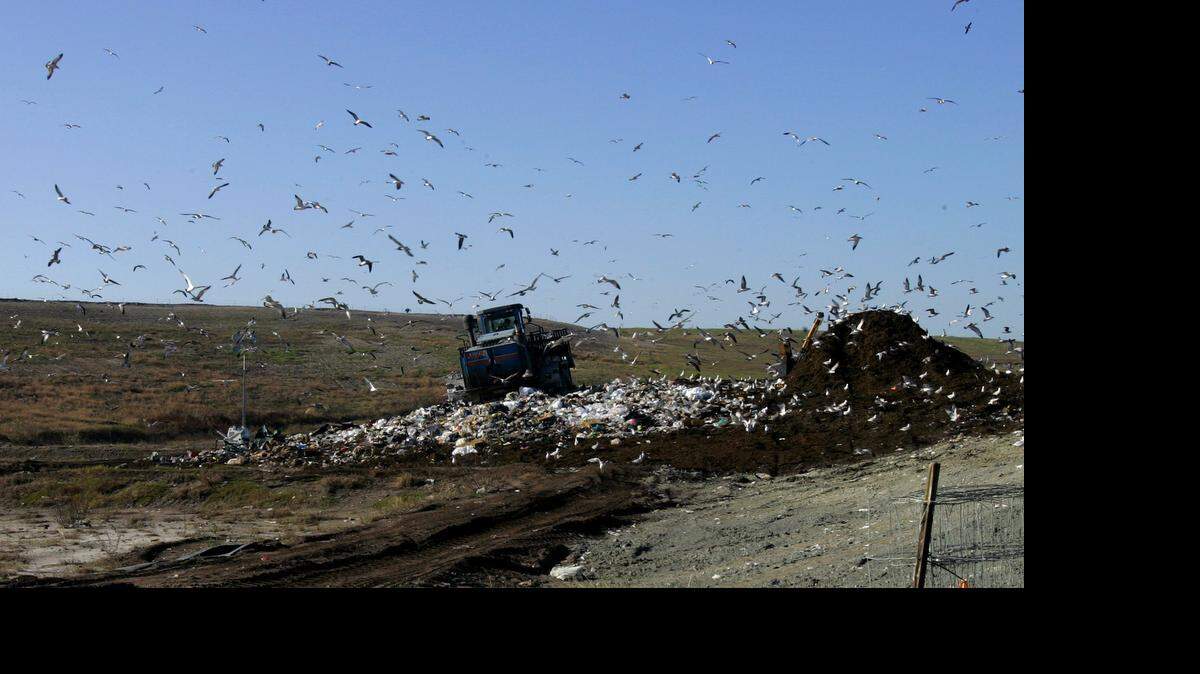
Officials with the Horry County Solid Waste Authority are scheduled to be in Montgomery, Ala., through Wednesday this week touring a plant that may be the answer to the county’s shrinking landfill space.
Danny Knight, executive director for the solid waste authority, will be among the attendees to meet with officials from Montgomery and those with Plantation, Fla.-based Infinitus Energy. The company pegs itself as “a revolutionary company, focused on converting waste to recovered raw materials and energy,” according to its website.
Knight said they are interested in what the company can do with the landfill’s recyclable material, which has lost value over the years and is projected to impact the authority’s budget next year negatively by about $600,000. But more importantly, the authority wants to view the diversion system to keep unnecessary materials out of the landfill, which is slated to be full by 2035 at the current rate of receiving trash.
“They guarantee they can recycle 75 to 80 percent,” Knight said of Infinitus’ promise. “It’s a dirty [materials recovery facility]. Garbage trucks just back up on the floor and pours everything out and they go through it, pickers and machinery, and pull out 75 to 80 percent.
“If what comes out the back end is not a high-dollar recyclable, they’ll turn into refuse-derived fuel. They burn it in some fashion. We know those plants are getting better and that’s the reason we’re going to Montgomery to see that one and see how it works.”
Montgomery’s facility was the first one to combine several of the most technologically advanced systems available for waste recovery to create the most advanced integrated waste recovery facility in the country, according to material provided by Infinitus.
Montgomery has an 81,992-square-foot facility that became operational last summer. Infinitus’s system sorts and recovers commodities such as cardboard, mixed paper, metals, aluminum cans, plastics and wood based on density, size, shape and material composition.
Knight said the authority will commission a classification, or a breakdown of how much of each recyclable the facility receives on average, after July in the new budget cycle.
“Once the budget gets approved and we’ve got money in the budget to do a classification study of our material coming in, then we’ll know how much paper is in it, how much glass, how much cardboard and how much table scraps,” Knight said.
This isn’t the first effort the authority has made to divert waste from its landfill. Late last year, solid waste officials traveled to Charleston County to see how that county composts food, which Knight said would alleviate a lot of room in the landfill.
If the budget is approved, Knight said he anticipates the classification study to be done by September. After that, the authority will put out a request for information that will outline how many tons of each material the landfill takes in and will ask companies what they can do with the material.
But the possibility of a plant similar to Infinitus will not answer all of the authority’s prayers on getting rid of all waste.
“We’re still going to have to maintain the landfill,” Knight said, adding there would be 25 percent of remaining waste. “It’s got to go somewhere.”
Contact JASON M. RODRIGUEZ at 626-0301 or on Twitter @TSN_JRodriguez.
This story was originally published April 26, 2015 at 8:22 PM with the headline "Horry County landfill officials in Alabama this week to tour waste conversion plant."