Remembering King Dixon, the legacy he left in Columbia and beyond

Former South Carolina football coach Sparky Woods had a phrase to describe King Dixon, the man who hired him to lead the Gamecocks. The coach, now in an off-field role at North Carolina, went on to rattle off parts of Dixon’s lengthy resume, including a war hero, top-flight player and Phi Beta Kappa.
But first, a simple phrase.
“He’s the best South Carolina graduated,” Woods said.
Dixon died Monday evening at age 83 after a battle with pancreatic cancer. Gamecocks broadcaster and former president of the school’s Letterman Association Tommy Moody said he spoke to Dixon three weeks ago, just after he got a second opinion on the diagnosis in Charleston. At the time, the decision was made not to not pursue treatment, but to make the former player, athletic director and school board member comfortable.
“It was just very, very difficult for him to make that phone call,” Moody said. “And then when he started talking about his beautiful bride Augusta, he just about lost it. But that’s the way King was. He lived life to the fullest. No question about it.”
Getting a handle on the full scale of King Dixon’s history isn’t easy. He was an in-demand football recruit who for a short while dreamed of becoming a doctor in the early 1950s. Just this year, he joined the University of South Carolina’s board of trustees as an interim member at age 82.
Between, he was a marine for 20 years, served as South Carolina’s athletic director through a time of tumult and change. He was thrust into that role, to a degree, but Woods remembered him as a man who stepped up when asked.
“From the time I got there, it was clear to me that he loved the University of South Carolina and he wanted to serve it any way he could,” Woods said.
The star player
Had things gone differently, Dixon might’ve ended up at Duke, pursuing a pre-med track, or at Clemson, playing for legendary Tigers coach Frank Howard.
Dixon’s father knew Howard and Duke coach Bill Murray, according to the book “Game of My Life: Memorable Stories of Gamecock Football.” In that book, Dixon told the story of watching a medical procedure after signing with Duke, and ultimately deciding that path wasn’t for him.
As his father was elected to the state’s house of representatives, Dixon considered Clemson and USC. Howard had enough or a relationship through Dixon’s father that Moody said they sometimes even went hunting together.
“Frank Howard just assumed that King was signed, sealed and delivered to be a Clemson Tiger,” Moody said. “And I think at the last minute, King said no, he wanted be a Gamecock and go play for for coach Rex Enright.”
According to “Game of My Life,” Howard sent Dixon a telegram late in his recruiting process that said “King, you have been an outstanding Tiger for four years. Don’t fowl it up today. Your coach, Frank Howard.”
Current South Carolina Board of Trustees member and former USC player Chuck Allen, an upstate product himself, said he always enjoyed hearing the story.
Dixon never played a game for Enright, who was replaced by Warren Giese after Dixon’s freshman year. Giese brought the vaunted split-T formation from national champion Maryland and Dixon thrived as a halfback.
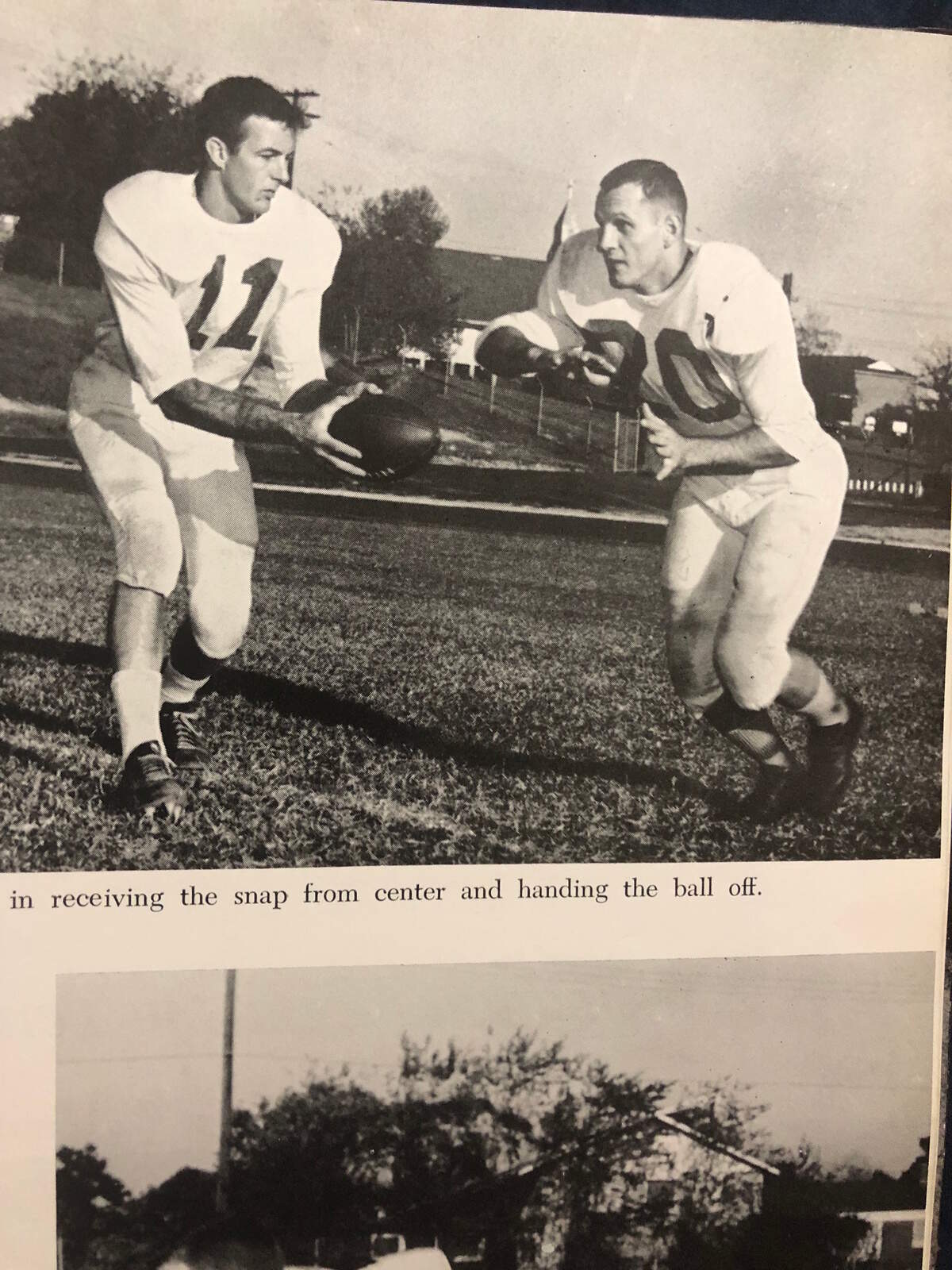
Sharing the backfield with Alex Hawkins and later Johnny Saunders, Dixon played both ways and earned All-ACC honors. For his career, Dixon posted 1,250 rushing yards, scored 11 touchdowns, caught 20 passes and completed 15. He was part of a pair of 7-3 squads across three seasons.
One of his most memorable moments came in October 1957, when South Carolina headed to Austin, Texas, to take on Darrell Royal’s first Longhorns team.
Dixon took the opening kickoff 98 yards for a touchdown and along with Hawkins helped key a fourth-quarter rally from down 21-7 to take the 27-21 win.
“We got a second burst of wind out there because of a couple of bad punts,” Dixon wrote in “Game of My Life.”
“We scored three touchdowns in that fourth quarter out there, where the ‘Eyes of Texas are upon you,’ and we beat Texas.”
Dixon, who was an honor student and graduated cum laude in political science, also helped the Gamecocks upset No. 10 Clemson his senior season, handing the Tigers their first loss.
“As a small child, I was out barely old enough to know what was going on,” Moody said. “But he gave me a lot of thrills from his career Carolina but even more so as a friend.”
Dixon went through the University of South Carolina with his eventual wife, and their senior yearbook at South Carolina, there are photos of them together on the same page as “outstanding seniors.”

Moody called them “one of the great stories. One of the great love stories. ... When he called me three weeks ago, he said, ‘You know what Tommy?’ He said, ‘I’ve been in love with that woman since third grade.’”
Serving his country, then his state
Dixon’s times as a marine spanned 22 years, and to start, it might just be best to list some of his decorations.
▪ A Bronze Star
▪ The Navy Commendation Medal with Combat V for Heroic Services
▪ Vietnamese Cross of Gallantry with Silver Star
In Vietnam, he was the commander of the 1st Force Reconnaissance Company, a paratrooper unit.
Woods recalled how the men Dixon served with remained a part of his life and in his thoughts.
“I can remember him reaching out to anybody that was an MIA to him during his time, that served under him,” Woods said. “He would contact their parents every year.”
After his service, Dixon returned to his hometown of Laurens, first working with the local YMCA and then as a vice president for Palmetto Bank. He came back to his alma mater in a development role, and circumstances shifted him to athletic director in an uncertain time.
AD Bob Marcum had been fired as a result of the 1988 steroid scandal surrounding the football program, and his replacement, Dick Bestwick, stepped down after 6 months for health reasons. Starting in October of 1988, Dixon was in the position of likely having to fire successful football coach Joe Morrison, but he died four months after Dixon was hired.
Woods was hired to replace Morrison, and then came a range of challenges, both in terms of administrative instability and NCAA issues for the basketball and football programs.
“He and I went to Kansas City when we were on probation,” Woods said. “And I remember asking him, why we were on indefinite probation? And they said that they thought we would mess up again and they didn’t want to give us a death penalty like they did SMU.
“I watched him work us through getting us off probation. I watched our academics rise.”
He also watched Dixon help shepherd the department into the Southeastern Conference. It had been more than 20 years since the Gamecocks departed the ACC. The football program spent the entire time as an independent, while the basketball program had joined the Metro Conference in 1983.
“Getting into the SEC was a must,” Woods said. “Or getting into a conference was a must.
“It was such a struggle to get a schedule. If we hadn’t got into that league, we would have found ourselves with a lot less of a position then they are in right now.”
Interim school president Art Smith was a driving force there as well (Dixon had also tried to get the school back into the ACC), and it pointed to another spot of instability — the administration above Dixon. Across more than four years, he served under three presidents. The man who hired him, James Holderman, resigned amid scandal. Smith departed for Utah in 1991, giving way to John Palms, who ended up letting Dixon go.
Dixon, who had big ideas on the facilities front and laid the groundwork for some of the expansion the department eventually undertook, was fired in 1992. Although the department got on better footing, there had been other issues causing instability.
The football team started 0-5 in its first season as an SEC school. There had been the firing of basketball coach George Felton, who learned the news from a reporter, and the 57-day coaching search for a replacement (who was fired after two seasons). He had also tried to eliminate the softball program, but that did not go through.
In pursuit of improving academics, Dixon had the football team turn down bowl bids in 1989 and 1990 because of exams.
David Newton, a former reporter at The State, covered that long basketball coaching search, and admitted he often disagreed with some of Dixon’s hires. He watched as Dixon’s style gave way to Mike McGee’s more business-like approach, something that was probably needed in the SEC era.
But Newton also remembered Dixon as a person who was a die-hard, one who was to a degree hampered by the situation he came into and was always a gentleman.
“He was about as dedicated a Gamecock fan as I’ve ever met,” Newton said.
“As far as being a cheerleader and a guy that loved the university, there’s probably never been anybody more dedicated.”
Longtime Columbia radio host Teddy Heffner said he felt the criticism was too much at times, considering the challenging situation Dixon walked into. Heffner also noted Dixon was adept at following orders, a characteristic that helped him land the job, and brought an unquestionable integrity to the role.
Despite some of the challenges Dixon faced, Woods focused on the man he remembered.
“He knew every person that walked the halls,” Woods said. “Whether they were mowing the grass or playing on it. I thought he was an outstanding leader, an outstanding man. I thought that, looking back, if any criticism of South Carolina might be that sometimes they just couldn’t believe they had their own that could best understand and fix their issues.”
A later chapter
Moody still remembers Dixon’s wife, Augusta, making the drive down from Laurens. After King’s time as AD, they moved back to their hometown and he returned to banking. But she drove down to Columbia each Wednesday for church.
“I always asked her, ‘well how is King doing?’ ” Moody said. “She’d say, he’s home on his tractor. He loves his tractor. He loves his farm.”
King Dixon had been an active member of his community ever since, and at the end of 2019, his alma mater called on him again. Governor Henry McMaster tabbed Dixon as an interim member of the school’s board of trustees.
Allen, a longtime board member, said Dixon was a great ambassador for the school and public servant. Dixon brought a certain presence to the board, though they only met a few times in person before the coronavirus pandemic forced things to go remote.
“I knew what kind of gentleman he was and what kind of man of character was,” Allen said. “He always came prepared and did his homework. And did everything he could do to serve in his capacity as a board member.”
Allen also said he was fascinated to hear stories from Dixon’s service.
Those were just some of the stories Dixon leaves behind, about the marks he left on those around him. Whether they were about exploits on the football field or as a farmer on his tractor, they all all seemed to carry the through-line of how he treated those around him.
“He was just a great guy, just a great person who, like I said, wore emotions on his sleeve,” Moody said. “He was very passionate about life very really passionate about his family, very passionate about the Gamecocks. And I cannot think of anybody I could say more good things about than King Dixon. He was just, just one in a million.”
This story was originally published July 8, 2020 at 5:00 AM with the headline "Remembering King Dixon, the legacy he left in Columbia and beyond."