
Does South Carolina need to start closing bars to slow our rising COVID-19 rates?
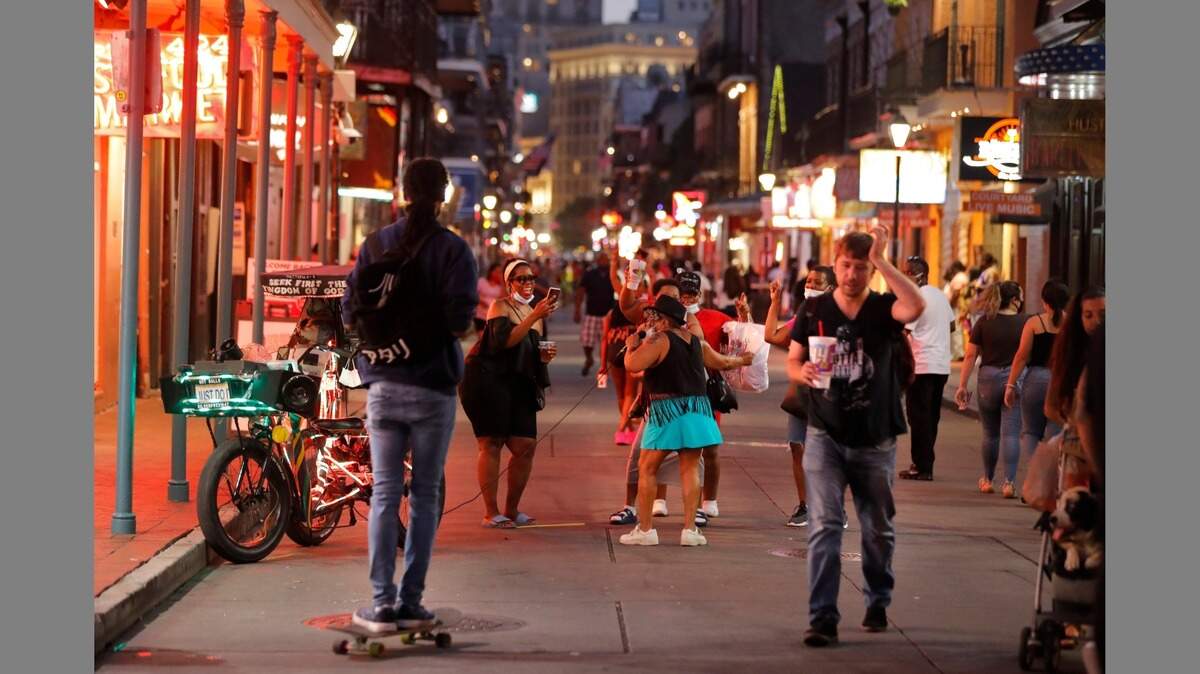
On bars, COVID-19
The Texas Medical Association has published a list ranking activities that risk exposure to COVID-19.
The activities with the lowest risk are given a “1” rating, and “opening mail” is among them. The activities with the highest risk are given a “9” rating, and “going to a bar” is one of the behaviors in that risky category.
The fact is that until the state or municipal authorities begin to close bars in the face of this pandemic, the virus is unlikely to come under control.
The ongoing failure to close bars continues to be a glaring error in South Carolina’s battle to get the COVID-19 infection rate under control.
David Finley, Isle of Palms
On reopening schools
Gov. Henry McMaster is putting our children and teachers on the front lines against COVID-19. During a worldwide pandemic that has yet to subside, why invite dangerous risks with a communicable disease that still doesn’t have a cure?
In defending his desire for students and teachers to start returning to classrooms in September, McMaster said that we are “all in the same boat” when comes to confronting COVID-19.
Really?
Well, maybe the governor should personally get inside the boat and actually spend time in a school classroom on a daily basis beginning Sept. 8. Maybe McMaster should:
▪ Sit in a cramped school bus on small seats with no social distancing.
▪ Have lunch in a cafeteria where it’s impossible to both eat and wear a mask.
▪ Spend hours in classrooms where people may have running noses and coughs — and may be taking off their masks to deal with both.
▪ Speak through a mask to large groups of children for several hours a day.
▪ Reject hugs from homesick, scared students in order to reduce the risk of infection.
Instead of trying to force teachers and students to do all of this, here is what the state should do instead:
▪ Implement a program that provides a computer to every family in need so that distance learning can work effectively in the short term.
▪ Build additional towers to help provide better communication services in rural communities.
▪ Arrange for day care-type services in schools and community centers to help parents have child care. These programs should have small numbers of children who attend on alternating days.
It’s unfortunate that neither President Donald Trump nor Vice President Mike Pence has ever worked in a public school; they simply don’t understand what they are asking of teachers and school employees.
This is a life-and-death issue.
Kat Stevens Bradley, Columbia
On CCU
I would like to thank Coastal Carolina University for offering Myrtle Beach seniors a variety of classes through the Osher Lifelong Learning Institute earlier this year.
By doing so, the university provided local seniors with a lifeline during troubled times. The teachers, staff and classmates were like one big family, and being able to see them via Zoom during the early months of COVID-19 kept many of us sane, socially connected and mentally stimulated amid the pandemic.
That’s why I was beyond distraught when I recently learned that the program’s summer classes had been cancelled, and that the staff had been let go, too.
I would like to urge Coastal Carolina University to partner with students, teachers and the community to find a creative way to continue this valuable — and during the pandemic, essential — service to the 55-plus community.
Christine Carr, Myrtle Beach
On responsibility
I am old enough to remember World War II.
Men went into military service; women, meanwhile, went into war plants.
Even children had war-bond stamp books with weekly dime contributions.
Everyone was involved and, generally, everyone accepted the necessary changes in lifestyle.
I believe that the COVID-19 pandemic we are now confronting is comparable to the environment we faced during World War II.
Like World War II, dealing with COVID-19 requires a universal acceptance of individual participation — it is vital if this nation is to recover from this pandemic.
During this current time of crisis, I believe that being asked to wear a face mask in public and maintain a 6-foot distance from others are very small sacrifices for Americans to make.
I don’t understand why so many people object to such simple requirements, but accepting these sacrifices should take precedence over complaining about “individual rights.”
Such complaints would have been unacceptable to make during World War II, and it should be unacceptable to make them now.
Janet O’Keeffe, Columbia