Can you be fined for shelling during beach renourishment in North Myrtle Beach?
It has been a shellers’ paradise during the beach renourishment that started in the Cherry Grove section of North Myrtle Beach last month.
Visitors have flocked to the beach since the U.S. Army Corps of Engineers’ boat located off the coast began pumping sand and seawater slurry onto the beach. The sea dredging has brought a number of shells, including conch, olives and whelks, that are usually hard to find.
And while shelling on the beach is not against the law, some people have taken to also digging into the giant sand wall that was created to replenish the dunes, a natural barrier between the ocean and homes, which is illegal.
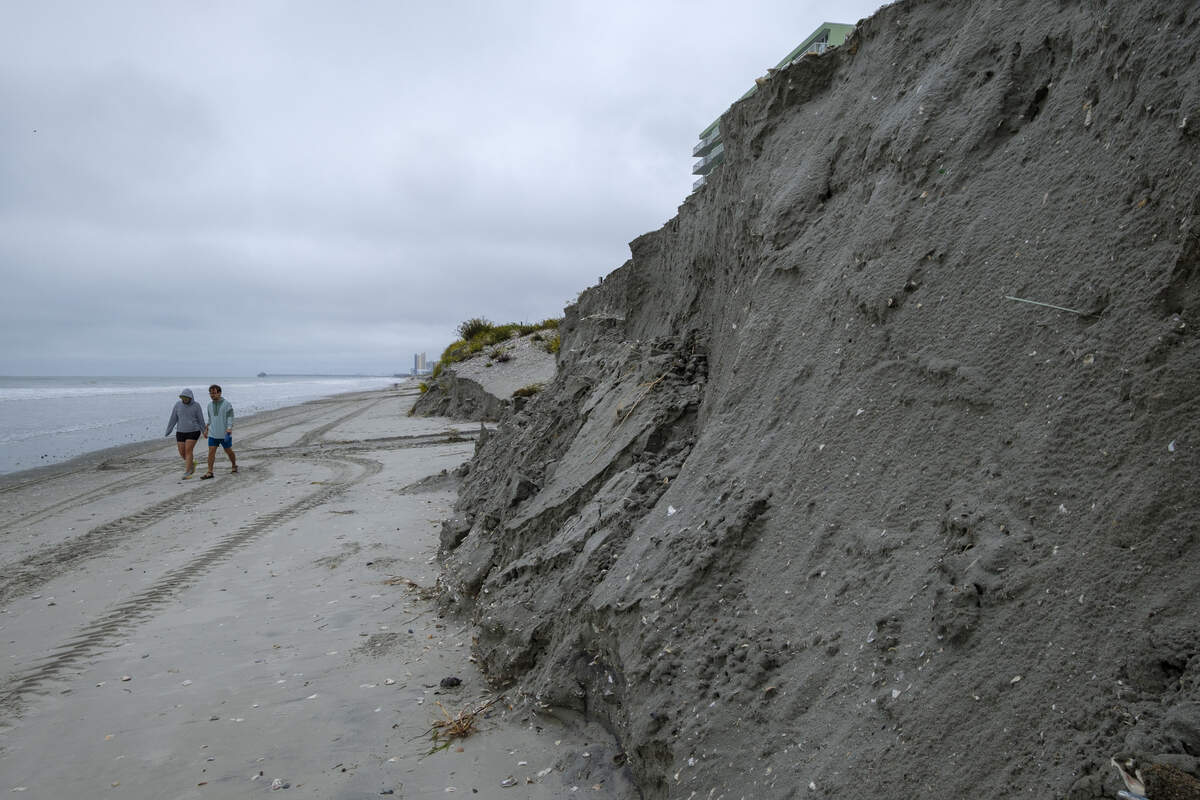
Any area delineated as a “dune” is a prohibited area, and digging is not allowed, Gianna Forbis, multimedia coordinator with the City of North Myrtle Beach, said by email.
“As beach renourishment continues, the Department of Environmental Services has the authority to cite individuals who violate these restrictions, which may result in fines,” Forbis said. “The City urges residents and visitors to stay out of areas restricted by the U.S. Army Corps of Engineers and to pay attention to how specific areas are designated throughout the duration of the project.”
Those who break the law could receive a fine of up to $500 and possible jail time, according to the city ordinance. Violations of federal regulations enforced by the U.S. Army Corps of Engineers could also result in penalties, including hefty fines and requirements to restore the affected area.
Renourishment project on South Carolina beaches
During the renourishment, the Corps will close each section of the beach being worked on, as well as the access area associated with it. The contractors work in 1,000-foot wide sections at a time.
The renourisment project will continue south for 26 miles, adding 2 million cubic yards of sand to the shoreline.
The project is expected to move through North Myrtle Beach by early 2026 and then continue through Myrtle Beach and Surfside Beach before reaching Garden City around April 2026.
As the project moves into Myrtle Beach, officials don’t expect to have such large sand walls as in North Myrtle Beach. The Myrtle Beach shoreline doesn’t have the same issues as North Myrtle Beach and the city also planted seagrass last year to help with the dunes’ structure, according to Myrtle Beach Police spokesperson Randolph Angotti.
However, it too is against the law to dig or be in the sand dunes within the city, Angotti said.